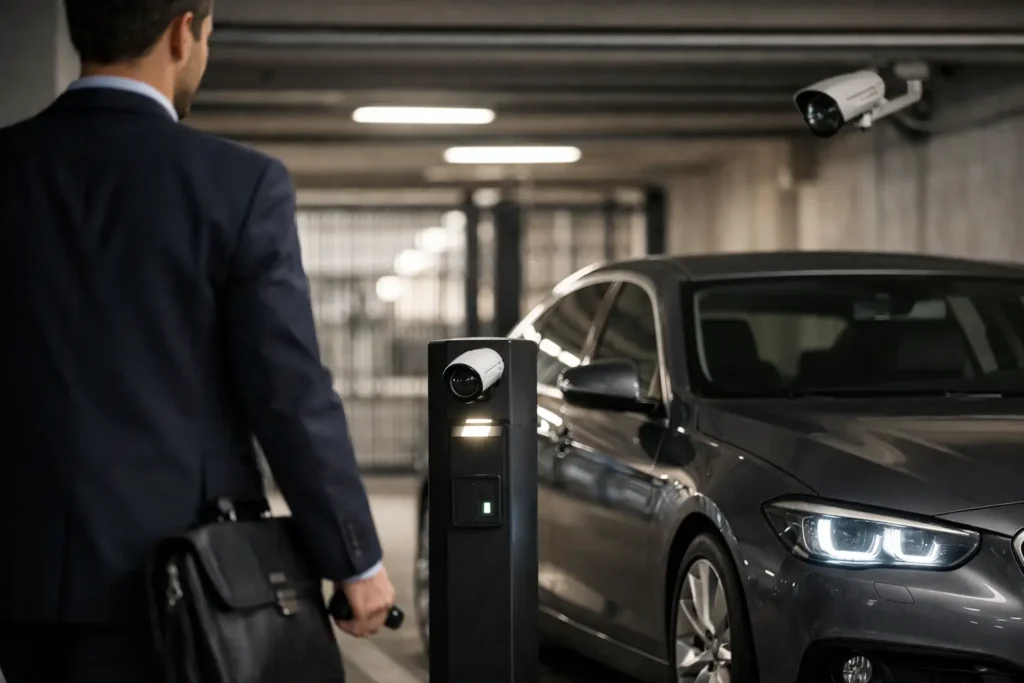
Best Secure Parking for Professionals
A parking space can ruin or improve a working week faster than most people expect. If you are leaving home early, returning late, carrying work equipment or simply trying to keep a valuable vehicle off the street, the best secure parking for professionals is not just about somewhere to leave a car. It is about reliability, proximity, controlled access and knowing your space will still be there next month.
That matters even more in central Manchester and Salford, where demand is high and the gap between a convenient private bay and a poor parking arrangement is often the difference between a straightforward routine and a daily frustration. Professionals do not usually need the cheapest option. They need the right one.
What the best secure parking for professionals actually means
Secure parking gets used as a loose term, but in practice it should mean something specific. For a professional driver, commuter or resident, security starts with the basics – off-street location, private management and restricted access. A bay within a residential development, a locked garage or a controlled private car park is generally a very different proposition from open-access parking.
The best option also depends on how you use your vehicle. Someone working regular office hours near Spinningfields may prioritise a space within a short walk of work and simple daily access. A resident in New Jackson or Castlefield may care more about overnight security, covered parking and consistency over several months. Owners of prestige, performance or classic vehicles usually place greater value on privacy, lower exposure and a setting that reduces unnecessary vehicle movement around the car.
That is why secure parking should be judged as a package rather than a single feature. Gates alone do not make a space suitable. Nor does a central postcode if access is awkward or the arrangement feels uncertain.
How to judge secure parking properly
The first question is whether the space is genuinely private and intended for long-term use. Professionally minded drivers tend to benefit most from allocated bays, garages and privately managed off-street spaces where the arrangement is clear from the start. If the parking is informal, frequently changing or dependent on daily availability, it stops being practical very quickly.
Access is just as important as location. A bay can look ideal on paper but become frustrating if entry relies on limited concierge hours, awkward key collection or a complex route through a development. For professionals working long days, flexible access matters. Early starts, late finishes and irregular schedules are common, so the space must fit real working patterns rather than an idealised routine.
Security features should be looked at in context. Gates, fobs, shutters, CCTV and resident-only access can all add value, but they are not equal in every setting. A secure underground bay in a well-managed development near Deansgate may suit a daily commuter perfectly. A private garage in a quieter part of Salford may be better for a vehicle used less often but needing stronger protection and more discretion.
Then there is the practical side that many drivers overlook – ease of manoeuvring. Tight turns, narrow ramps and awkward pillars are not minor details if you drive a larger saloon, SUV or performance vehicle. A space that is technically secure but unpleasant to use every day can soon become the wrong choice.
Best secure parking for professionals by use case
The right space depends on who is using it and why.
For city-centre professionals, proximity to the workplace usually comes first. Areas such as Spinningfields, St Peter’s Square, Oxford Road and Deansgate attract strong demand because drivers want a dependable base close to the office. In these locations, a privately rented bay in a residential or mixed-use development often offers the best balance of security and convenience, especially for monthly use.
For flat residents without an allocated space, the priority is slightly different. The best arrangement is usually one close to home, with straightforward access at all hours and enough reassurance to leave the vehicle for extended periods. This is especially relevant in high-density developments where residents may have no parking included or face long waiting lists for in-building spaces.
For businesses arranging employee parking, consistency matters more than almost anything else. Staff need to know where they are parking, how they access it and whether the arrangement will remain in place. A secure monthly bay near the workplace can remove a surprising amount of day-to-day friction, particularly for senior staff, client-facing teams and employees carrying equipment.
For owners of higher-value vehicles, security becomes more selective. The best secure parking for professionals in this category often means a garage or a discreet private bay within a well-managed development rather than a more exposed open space. It depends on the vehicle, how often it is used and whether weather protection is part of the requirement.
Location matters, but not in the obvious way
Many people start by searching only for the closest possible parking. That makes sense to a point, but the nearest option is not always the strongest one.
In busy districts such as Northern Quarter, Ancoats and parts of central Salford, parking demand can make the closest available bay expensive, awkward or poorly suited to long-term use. Moving a few streets further out can sometimes produce a better-managed space, easier access and stronger overall security without adding much walking time.
This is particularly true around major residential developments. Some buildings have secure bays that suit local residents perfectly but are less practical for outside users because of access rules or internal layouts. Others work very well for long-term rentals because entry, exit and day-to-day use are simple. Knowing the difference saves time.
That is where local knowledge becomes useful. In Manchester, parking quality can vary sharply even within the same postcode. A bay near MediaCity or Greengate may suit a regular commuter better than a nominally closer option if the route is simpler and the access arrangements are more reliable.
What space owners should understand
There is another side to this market. Many of the best secure spaces used by professionals come from owners with unused bays, garages or allocated residential parking they do not need every day.
If you own a space in a development where parking is scarce, there is often strong demand from local professionals, residents and businesses looking for something stable rather than temporary. The appeal is straightforward: long-term users are usually looking for a dependable monthly arrangement, not constant churn.
For owners, the strongest opportunities tend to be in developments near commercial districts or in residential schemes where car ownership remains high but allocated parking is limited. A vacant bay in Deansgate, Castlefield, New Jackson or Salford Quays can be a practical asset if matched with the right long-term driver.
The best results usually come from being clear about access, vehicle suitability and any building-specific requirements from the start. A simple, realistic arrangement is far more attractive than one that sounds flexible but creates uncertainty later.
Common mistakes professionals make when choosing parking
The first is focusing only on monthly price. Cost matters, but the cheapest private space is rarely the best value if access is awkward, the location adds daily inconvenience or the arrangement feels unstable. A slightly higher monthly rate can make much more sense if it removes uncertainty and saves time every week.
The second is assuming all secure parking is much the same. It is not. There is a big difference between an open residential forecourt, an allocated underground bay and a private garage. What works well for a standard commuter vehicle may not be right for a prestige car or for someone using the car only occasionally.
The third is failing to think beyond this month. Professionals usually benefit from parking that supports routine. If your work pattern, home location or vehicle needs are unlikely to change soon, it is worth choosing a space that still makes sense six months down the line.
A practical way to choose well
Start with three questions. Do you need the space near home, near work or as a storage-led option? Do you need daily convenience, stronger protection or both? And how important is covered or enclosed parking for your vehicle?
Once those are clear, the field narrows quickly. From there, look at access method, building type, ease of use and the reliability of the monthly arrangement. If a space creates doubt at any stage, it is usually worth moving on. Good long-term parking should make life simpler, not add another variable to manage.
In a market where demand often outstrips supply, speed matters too. Good private spaces in the right locations do not tend to remain available for long, particularly around established business districts and major residential schemes. That is one reason specialist services such as Manchester City Parking have become useful to both drivers and space owners – they remove much of the delay and uncertainty that often comes with finding the right match.
For most professionals, the best parking choice is not the most visible or the most advertised. It is the one that is secure, practical, well located and dependable enough to disappear into the background of daily life. That is usually the real test – when your parking stops being something you have to think about at all.