Parking Space Contract Guide for Manchester
A monthly parking arrangement can look simple until the first access fob stops working, a building manager asks who is using the bay, or either party needs to end the arrangement. A clear parking space contract guide helps avoid those awkward conversations by setting out exactly what the driver may use, what the owner will provide and what happens when circumstances change.
For private bays in Manchester city centre and Salford, this matters particularly in managed developments where access, concierge procedures and allocated-space rules are part of daily life. The aim is not to make a straightforward rental overly formal. It is to give both sides certainty from day one.
What a parking space contract should achieve
A contract for a private parking bay is a written record of the arrangement between the bay owner and the driver. In most cases, it is a licence to use a specified space rather than a residential tenancy or a transfer of wider property rights. The wording and the actual arrangement matter, so anyone dealing with an unusual situation or a high-value commercial arrangement should take independent legal advice.
For a normal long-term arrangement, the document should answer practical questions without ambiguity. Which bay is being rented? When can it be used? How much is due each month? Is there a notice period? Who replaces a lost fob? If the contract does not answer these points, assumptions soon take over.
A good agreement also protects the owner. It confirms that the driver is renting a parking space only, not a storage unit, visitor permit or right to use other resident facilities. For drivers, it confirms that a bay advertised as secure and allocated is genuinely available for their use for the agreed term.
Parking space contract guide: the essential terms
Identify the exact space and permitted vehicle
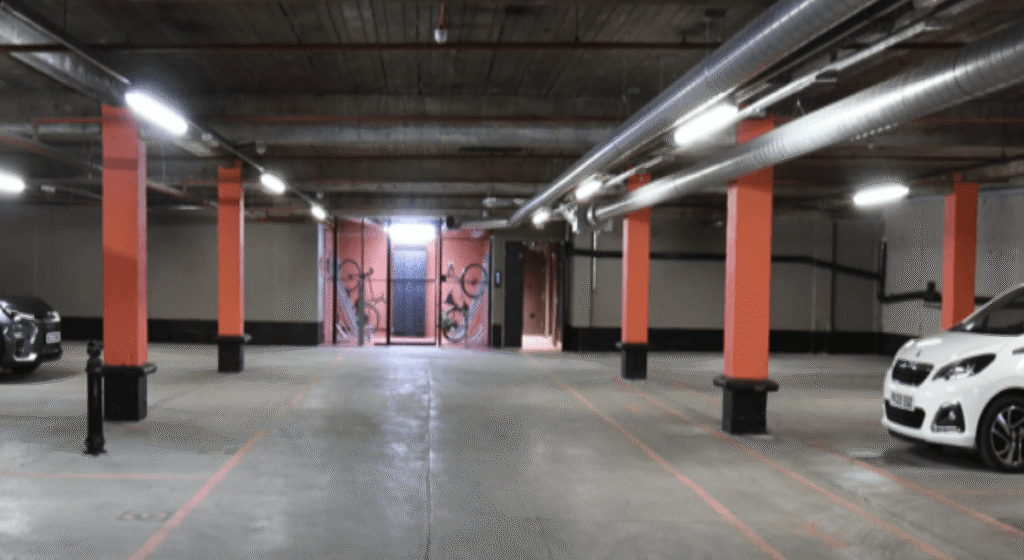
Start with the full property address, the bay number and, where useful, a simple plan or photograph showing its location. This is especially valuable in larger basement car parks at developments around Deansgate, Greengate, New Jackson and Salford Quays, where bay numbering can be less obvious than it appears in a listing.
The agreement should state whether the space is for one vehicle only and whether it is suitable for the driver’s vehicle. A narrow bay, low ceiling, tight ramp or restricted turning area may not suit a larger vehicle. If a driver owns a prestige, classic or performance vehicle, it is sensible to confirm ground clearance, access width and any site rules before committing.
Include the vehicle registration where possible. It gives the owner and building team clarity over who is authorised to enter, while allowing a replacement vehicle to be added by written agreement.
Set the rent, due date and payment method
The monthly rent should be stated plainly, alongside the payment date and method. It should also be clear whether the first payment covers a full calendar month, a part-month or a period running from the move-in date.
Owners should avoid vague wording such as “payment around the start of the month”. A fixed date is easier to manage and fairer to both parties. Drivers should check whether the advertised figure includes all normal costs connected with access to the bay, rather than assuming an access device, administration charge or replacement fob is included.
If the rent may change after an initial period, say how and when. For many private arrangements, a fixed price for the agreed term is the cleanest approach. If a review is needed, give reasonable written notice and make clear that the driver can end the arrangement if the new price is not acceptable.
Be specific about access and security
Access is often the deciding factor in a long-term parking rental. The contract should record how the driver enters the car park: for example, by remote fob, swipe card, coded gate or concierge-approved registration. It should identify how many access devices are supplied and whether a one-time access or replacement charge applies.
The owner should not promise a level of security the building cannot guarantee. Controlled gates, cameras and concierge presence can be valuable features, but they do not remove all risk. A more accurate description is that the bay is within a privately managed, access-controlled development, subject to the building’s own systems and rules.
Drivers should use only the access route and device provided. Sharing a fob, tailgating another vehicle through a gate or allowing an unapproved person to use the space can put the owner’s own parking rights at risk with the managing agent.
Deal with deposits and access devices fairly
Not every parking agreement needs a deposit. Where the main concern is the return of a remote fob or access card, a clearly stated refundable device deposit may be more proportionate than a large general deposit.
The contract should say the amount, what it covers, when it will be returned and what evidence is needed for any deduction. For example, an owner may retain the stated replacement cost if a fob is not returned or has been damaged. It should not become an undefined charge for normal wear or a way to withhold money after the arrangement ends.
Both parties benefit from a short handover record. Note the number and type of fobs issued, test them at collection and confirm the condition of any garage key, bollard key or remote control.
Agree a notice period that works in practice
Long-term parking should still be flexible enough to accommodate a house move, change of job, sale of a flat or a driver no longer needing the bay. A written notice period gives the owner time to find a replacement user and gives the driver a predictable exit route.
One calendar month is common for monthly arrangements, although a shorter or longer period may suit the circumstances. What matters is that the contract explains when notice takes effect, how it must be given and the final date on which the driver may use the space.
There should also be a process for serious breaches. Repeated non-payment, unauthorised use, misuse of access equipment or behaviour that breaches building rules may justify earlier termination. The language should be reasonable and specific, not a catch-all right for either party to cancel without explanation.
Building rules can override assumptions
Before an owner rents out an allocated bay, they should check the lease, tenancy agreement, management-company rules and any lender requirements that apply to the property. Some developments allow private rentals without difficulty; others require the occupant to be a resident, require registration with concierge, or restrict access credentials to named users.
This is not a minor administrative detail. A bay may be owned or allocated to a flat, yet the flat owner may still be bound by conditions on how it can be used. If the arrangement is not permitted, the driver could lose access with little warning and the owner may face a dispute with the managing agent.
Drivers should ask one direct question before paying: is an external long-term user permitted under the development rules? In high-demand locations, an honest answer is more valuable than a quick agreement that later unravels.
Responsibilities during the rental
The owner is normally responsible for ensuring they have the right to offer the bay and for providing the agreed access at the start of the term. They should tell the driver promptly about planned gate works, changes to entry procedures or any issue that materially affects use of the space.
The driver is responsible for paying on time, parking within the marked bay and following the site rules. The space should not be used for commercial storage, vehicle repairs, abandoned vehicles or anything that obstructs neighbouring bays, unless the owner and building rules expressly allow it.
For a garage or enclosed space, the permitted use needs even more care. Some drivers need secure long-term vehicle storage, while others simply need an everyday city-centre bay. The agreement should say whether the space is for parking only and whether items may be kept inside. Clarity protects security, fire safety and neighbour relations.
Keep the paperwork simple, but keep it
A contract does not need pages of dense legal wording to be useful. It does need names and contact details, the exact bay, monthly rent, start date, access arrangements, deposit terms, notice period, permitted use and signatures or written acceptance from both sides. Save the final version, payment record and handover messages in one place.
Manchester City Parking can help match drivers with suitable long-term private bays, but the final arrangement is strongest when both parties have the same written understanding. No waiting lists, no assumptions and no uncertainty over what has been agreed.
The best time to discuss access, building rules and notice is before the first payment is made. A few clear terms at the outset leave both the driver and the owner free to treat the arrangement as it should be: dependable monthly parking, with no unnecessary friction.