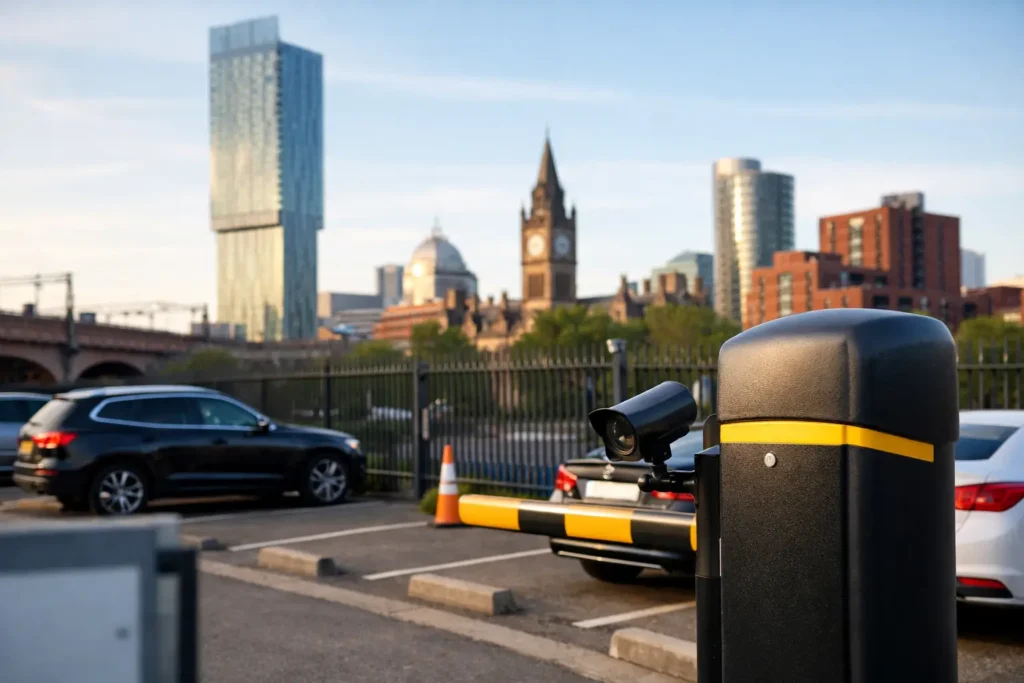
Private Parking in Manchester: What Matters
A car left on the street in the city centre is rarely forgotten about. You think about permits, damage, break-ins, road closures, late-night returns and whether you will find the same spot tomorrow. That is why private parking matters more than most drivers admit. For residents, commuters and owners of higher-value vehicles, it is not a luxury. It is the difference between hoping for a space and knowing you have one.
In Manchester and nearby Salford districts, that difference has become sharper. More flats have limited or no allocated bays. More professionals are driving in at irregular hours. More people want off-street storage that feels secure, discreet and dependable. Public parking has its place, but for long-term use it often becomes expensive, inconvenient or simply inconsistent. Private parking solves a different problem – certainty.
Why private parking is different
The real appeal of private parking is not only security. It is control. A dedicated bay in a residential development, undercroft, gated courtyard or managed private area gives drivers something the street rarely can – predictable access.
That matters if you live near Deansgate and do not want to circle the block after work. It matters if you work around Spinningfields and need a regular monthly base rather than a daily gamble. It matters even more if your vehicle is performance, prestige or classic and you are not prepared to leave it exposed overnight.
There is also a practical financial point. People often compare monthly private parking with the daily cost of other options and assume private means expensive. Sometimes it is. Prime city-centre bays are scarce, and scarcity affects price. But when you factor in time lost searching, permit limitations, risk of damage and the sheer irritation of unreliable parking, a fixed monthly arrangement often makes more sense than it first appears.
Who private parking suits best
Private parking is not for every driver. If you only come into the city once a month, a long-term bay may be unnecessary. If your routine changes every week, flexibility may matter more than a fixed location. But for a large part of the market, the fit is obvious.
Residents in flats without an allocated space are one clear group. Many assumed city-centre living would mean simple access to secure parking, only to find waiting lists, limited building spaces or lease arrangements that do not include a bay. A private monthly space nearby restores the convenience that should have come with the postcode in the first place.
Commuters are another. If you drive into the centre several days a week, reliability beats improvisation very quickly. The value is not just where you park, but how little thought you need to give it.
Then there are owners of vehicles that should never be left to chance. Not every car needs discreet off-street storage, but some clearly do. If replacement costs are high, if the vehicle attracts attention, or if condition matters to you, private parking is a straightforward form of protection.
What to look for in a private parking bay
Not all bays are equal, even when they look similar on paper. The right choice depends on your vehicle, your routine and how much importance you place on security and ease of access.
Location should come first, but not in the simplistic sense of choosing the closest pin on a map. A bay that is five minutes farther away yet easier to enter, better lit and less exposed may be the stronger option. In dense areas such as the Northern Quarter or Castlefield, small differences in access can affect daily use more than people expect.
Security is the next filter. Gated developments, fob access, underground parking and private residential blocks all offer different levels of reassurance. None is a guarantee against every risk, but they generally provide a much better environment than kerbside parking. If the car is valuable, ask practical questions. Is the bay visible from the street? Is entry controlled? Is the space tucked into a quiet, managed building or in a more open area?
Vehicle fit matters as well. Some spaces are ideal for a hatchback and awkward for a wider saloon or 4×4. If you drive a larger vehicle, dimensions are not a small detail. A bay can be technically available but still a poor match if access ramps are tight or neighbouring spaces leave little room to manoeuvre.
Private parking for bay owners
There is another side to this market that often gets overlooked. Across the city, plenty of private bays sit empty for most of the month. Some belong to flat owners who do not drive. Some are attached to properties where the occupier works from home or has sold a car. Others are simply underused because routines change.
In high-demand areas, an unused bay is more than a spare convenience. It is an asset with monthly value. The strongest demand tends to come from locations where residential density is high and parking is chronically limited – central Manchester, Salford Quays and the areas around major business districts.
For owners, the appeal is straightforward. A suitable bay can generate passive monthly income without the churn of short-stay turnover. The arrangement is also usually simpler when the focus is on long-term drivers rather than constant bookings. One vetted occupier, one agreed monthly figure and a clear access arrangement are a far more practical model for many owners than trying to manage repeated short-term use.
That said, suitability depends on the lease, building rules and access setup. A bay in a development with strict restrictions may not be appropriate to let. A good service should be clear about that rather than pushing every space into the market.
Why speed and simplicity matter
Parking enquiries are often urgent. Someone has moved flat, changed job, bought a better vehicle or lost access to a previous space. They do not want a long sales process. They want to know what is available, what it costs and how quickly they can secure it.
This is where the process matters almost as much as the bay itself. No waiting lists, clear monthly terms and a prompt response remove most of the friction. If a driver has to chase vague listings for days, the service has already failed the brief.
The same applies to bay owners. If renting out a private space involves endless admin, hidden charges or uncertainty around who will use it, many will not bother. A practical matching service works because it removes delay and keeps the arrangement direct.
That is why businesses such as Manchester City Parking focus on curated stock rather than volume for its own sake. A smaller set of genuine, usable spaces in the right locations is worth more than pages of stale listings that waste everyone’s time.
The trade-off with private parking
Private parking is not a magic answer to every urban parking problem. Good bays are limited. Premium postcodes command premium rates. Some drivers will need to compromise on distance, access type or budget.
That is normal. In a constrained market, the best outcome is rarely perfection. It is finding the right balance between proximity, security and monthly cost. For some, a fully gated bay within walking distance of the office is the priority. For others, a slightly less central space that offers better value and reliable overnight storage is the smarter decision.
The key is to be honest about what matters most. If the car is your daily tool for work, convenience may outweigh everything else. If it is a prized vehicle you use selectively, security and discretion may come first.
Private parking in practice
The most successful long-term parking arrangements are usually the least dramatic. The driver knows where they are going. The owner knows who is using the bay. Access is clear. Fees are transparent. Nothing needs constant follow-up.
That sounds simple because it should be. In a city where parking can easily become an ongoing irritation, a dependable private bay turns one of the most annoying parts of daily travel into a solved problem.
If you need regular access in the city, or you have an unused bay in a high-demand area, it is worth treating private parking for what it really is – not just a convenience, but a practical piece of urban life that works best when it is arranged properly from the start.
The right space should feel quiet, secure and easy to rely on. Once you have that, parking stops being something you manage and becomes something you no longer need to think about.
Advertisement