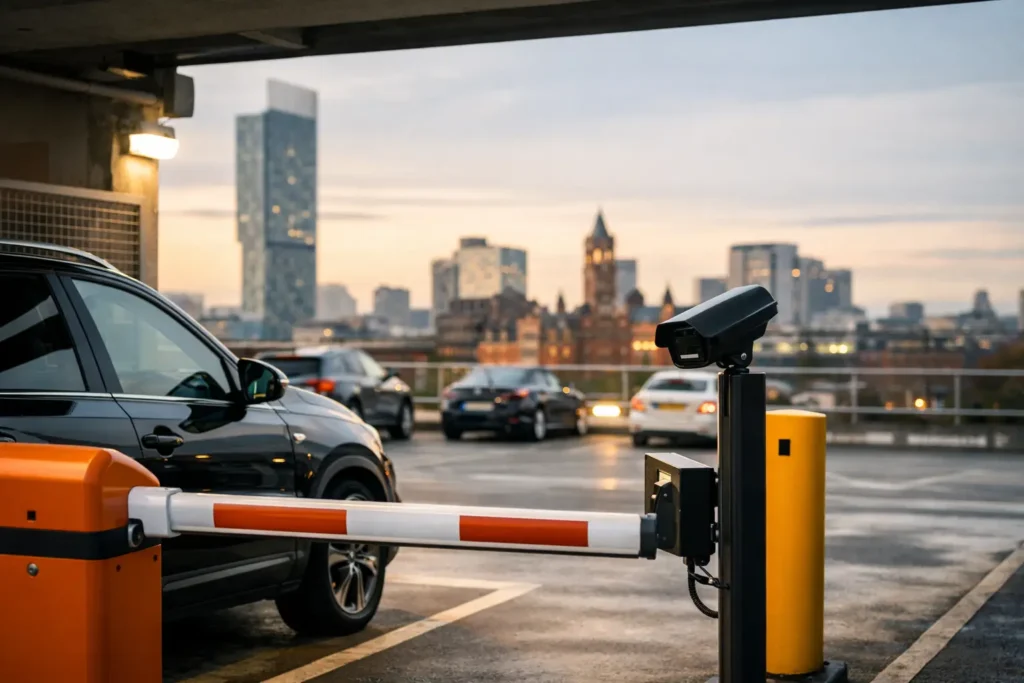
What Makes Secure Parking Reliable in Manchester?
A gated entrance can look reassuring, but a gate alone does not make a parking space dependable. For drivers who use the same bay every day, and owners trusting someone with access to their development, what makes secure parking reliable is the combination of the right physical setting, clear access arrangements and a tenancy that works in practice over the long term.
That matters particularly around Manchester city centre, where a private bay is often part of the routine rather than an occasional convenience. Whether the vehicle is used for commuting, kept at a city-centre flat, or stored carefully between journeys, reliability means arriving without uncertainty and knowing exactly where responsibility sits.
What makes secure parking reliable?
Reliable secure parking is predictable. The driver can enter when they need to, the allocated space remains available, and the owner has confidence that the person using it understands the development and the agreed terms.
Security is therefore broader than a shutter, a gate or a CCTV camera. Those features can be valuable, but they work best alongside good site management, a clear route into the car park and an arrangement that is properly matched to the vehicle and user. A secure underground bay in a well-managed residential development may be ideal for a resident or professional. A private garage may be more suitable for a classic, prestige or performance vehicle that needs greater privacy and protection from the weather.
It also depends on the individual site. Some drivers need unrestricted access because their working hours vary. Others place the greatest value on a discreet, enclosed space. The right solution is not necessarily the one with the longest list of features. It is the one whose features, rules and access hours fit the driver’s real requirements.
Controlled access must be practical, not just present
A reliable private parking space normally has a defined way to enter and leave, such as a fob-operated gate, remote-controlled shutter, keyed garage or staffed entrance. The critical detail is how consistently that access works for the long-term user.
Before agreeing to rent a space, drivers should establish which access device is supplied, whether there is a deposit for it, and what happens if it is lost or stops working. The route from the entrance to the bay also matters. A secure car park that is difficult to navigate, has narrow turns or requires an additional door or lift access may be perfectly suitable for one vehicle but impractical for another.
For parking space owners, this is where clear information prevents avoidable problems. Stating whether the bay is behind a controlled gate, within a residents-only basement, or inside a private garage gives prospective drivers a realistic picture from the outset. It also helps filter enquiries from people whose needs do not match the site.
The parking environment affects confidence
The condition and layout of a parking area are as relevant as its entry system. A clean, well-lit, privately managed space with marked bays and sensible circulation provides a very different experience from an exposed or poorly maintained area.
Lighting improves visibility when arriving early or returning late. CCTV can provide an additional layer of reassurance, particularly in larger developments, although it should not be treated as a substitute for controlled access or responsible use. The same applies to concierge or on-site management. These can be useful advantages, but the day-to-day value lies in a site that is orderly and where access arrangements are understood.
Bay dimensions deserve attention too. A space may be secure yet still unsuitable if it is tight for a larger saloon, SUV or performance vehicle with low ground clearance. In underground developments, ramps, pillars and turning circles can be just as important as the measurements of the bay itself. A reliable arrangement starts with an honest assessment of vehicle suitability, rather than discovering limitations after access has been handed over.
Reliability depends on a clear long-term arrangement
The strongest security features lose value when the rental arrangement is vague. Long-term private parking works best when the driver and space owner are aligned on the practical essentials: the specific bay being rented, the monthly payment, the start date, notice period, access device arrangements and any development rules that apply.
An allocated bay should be identifiable, whether by bay number, location description or development plan. This avoids confusion in larger car parks, especially where several spaces look similar. The driver should know whether the bay is solely for their use and whether the owner retains any need for access. In most cases, exclusivity is what turns a private parking bay into a dependable part of everyday life.
Terms also need to be realistic. A monthly arrangement is usually better suited to city-centre residents, regular commuters and businesses than a series of informal short commitments. It gives the driver stability and gives the owner more predictable income. Equally, both sides benefit from a sensible notice period if circumstances change, such as a flat sale, a tenancy ending or a business moving premises.
For owners, a carefully matched long-term user is generally preferable to frequent changeovers. Fewer handovers mean less administration, fewer access devices to manage and a lower chance of misunderstandings over the correct space. For drivers, dealing directly with a clearly identified owner creates a more accountable arrangement than relying on assumptions.
Why the right user matters as much as the right site
Secure parking is shared property infrastructure, particularly within residential developments. A driver may have exclusive use of a bay, but they are still entering a building managed for residents, leaseholders or occupiers. Respecting access rules, keeping entrances clear and using only the agreed space protects the experience for everyone.
That is why matching matters. A professional working near Spinningfields may need dependable weekday access. A resident at Deansgate Square, New Jackson or a Salford Quays development may need a bay that feels like a natural extension of their home. An owner of a valuable vehicle may prioritise an enclosed garage or a restricted-access basement over the shortest possible walk.
The same logic applies to businesses arranging employee parking. The most reliable option is one that is close enough to be useful, has straightforward access for the employee’s hours, and is agreed on a monthly basis with no ambiguity about who may use it. A space that is technically available but difficult to access or poorly suited to the user will not remain reliable for long.
Questions worth asking before committing
A few direct questions can reveal whether a space is genuinely suited to long-term use. Ask how access is provided, whether entry is available at the times you require, and whether the bay is behind a gate, shutter or within a garage. Confirm the exact bay, its dimensions and any restrictions on vehicle size or type.
It is also sensible to ask about the development’s practical rules. For example, are there restrictions on access devices, overnight use, storage of items in the bay, or use of shared areas? The aim is not to make the process complicated. It is to avoid assumptions that can undermine an otherwise good arrangement.
Owners should ask corresponding questions of prospective renters. What vehicle will use the bay? Is the driver looking for a stable monthly arrangement? Do their access needs fit the property? A straightforward conversation at the beginning is often the difference between a dependable rental and an avoidable changeover a few weeks later.
A dependable option for drivers and parking space owners
For drivers, reliable secure parking removes a recurring pressure from city-centre living and working. For owners, it turns an unused allocated bay or garage into a useful monthly asset without needing to compromise the security or character of the development.
Manchester City Parking focuses on matching long-term users with privately managed bays, garages and secure vehicle storage across Manchester and Salford. The value is not simply finding a vacant space. It is finding one where location, vehicle suitability, access and expectations all make sense.
When viewing or considering a private space, look beyond the gate. The best long-term parking arrangements are the ones that feel uneventful: access works, the bay is yours when you arrive, and both parties know exactly how the arrangement operates.