How to Protect Classic Cars in Storage Safely
A classic car can deteriorate surprisingly quickly when it is left in the wrong space. Damp finds its way into trim, condensation settles on brightwork, and an unsecured location creates risks that no owner should have to accept. To protect classic cars in storage, the priority is not simply finding somewhere off the road. It is choosing a dry, secure and practical long-term space, then preparing the vehicle for a period of inactivity.
For owners in Manchester and Salford, this often means looking beyond an open residential bay. A private garage or enclosed secure storage space may be the better fit for a cherished vintage, prestige or collectible vehicle, particularly through colder and wetter months.
Start with the right type of storage space
The best storage option depends on the car, how often you plan to visit it and the condition you expect it to remain in. An enclosed private garage is normally the strongest choice for a classic car because it offers protection from rain, frost, falling debris and casual attention. It also gives the owner a controlled environment for checks, cleaning and careful access.
A secure underground bay within a well-managed residential development can work for cars used regularly, but it is not always suitable for long-term preservation. The key questions are whether the bay is genuinely dry, whether there is a history of water ingress, how controlled access is, and whether neighbouring vehicles leave enough room to avoid accidental knocks.
A space should be assessed in person before any arrangement is made. Look for signs of standing water, damp patches, mould, poor drainage or leaking pipework. In Greater Manchester, where prolonged wet weather is a reality, a garage that feels merely sheltered is not necessarily dry enough for valuable long-term storage.
Security matters just as much as weather protection. A suitable space should have restricted access, a reliable door or gate, good lighting and a clear agreement on who can enter. For a vehicle that may spend weeks or months unused, a quiet privately managed garage is generally more reassuring than a location with frequent footfall and unrestricted access.
Control moisture before it controls the car
Moisture is one of the most persistent threats to a stored classic. It can affect paintwork, chrome, leather, carpets, seals and electrical connections. The problem is not limited to visible leaks. Condensation can form when temperatures change rapidly, especially in enclosed spaces with limited airflow.
Before storing the car, make sure it is clean and completely dry. Water trapped around wheel arches, under seals or in fabric roof folds can create problems while the car is standing still. Clean the interior too. Food wrappers, damp mats and even small traces of moisture can encourage odours and mould in a closed cabin.
Ventilation needs judgement. A garage should not be sealed so tightly that damp air lingers, but it should not be open to driven rain or external humidity either. A dry, well-maintained garage with modest airflow is usually preferable to a draughty unit or a damp underground corner.
A moisture absorber can help in a closed vehicle interior, provided it is checked and replaced as required. In a garage with known damp issues, however, it is not a substitute for finding a better space. Disposable products can manage a small amount of humidity; they cannot correct a leaking roof or poor drainage.
Prepare the car for a proper lay-up
Storage preparation should be proportionate to the length of time the vehicle will remain unused. A car left for a fortnight needs far less attention than one stored over a full season. The aim is to return to a clean, stable vehicle rather than one that has been neglected behind a locked door.
Begin with a careful wash and dry, then remove anything that could hold moisture against surfaces. This includes wet boot liners, cleaning cloths and fitted mats that have not fully dried. Give the cabin a final vacuum, close all windows securely and ensure the boot is dry.
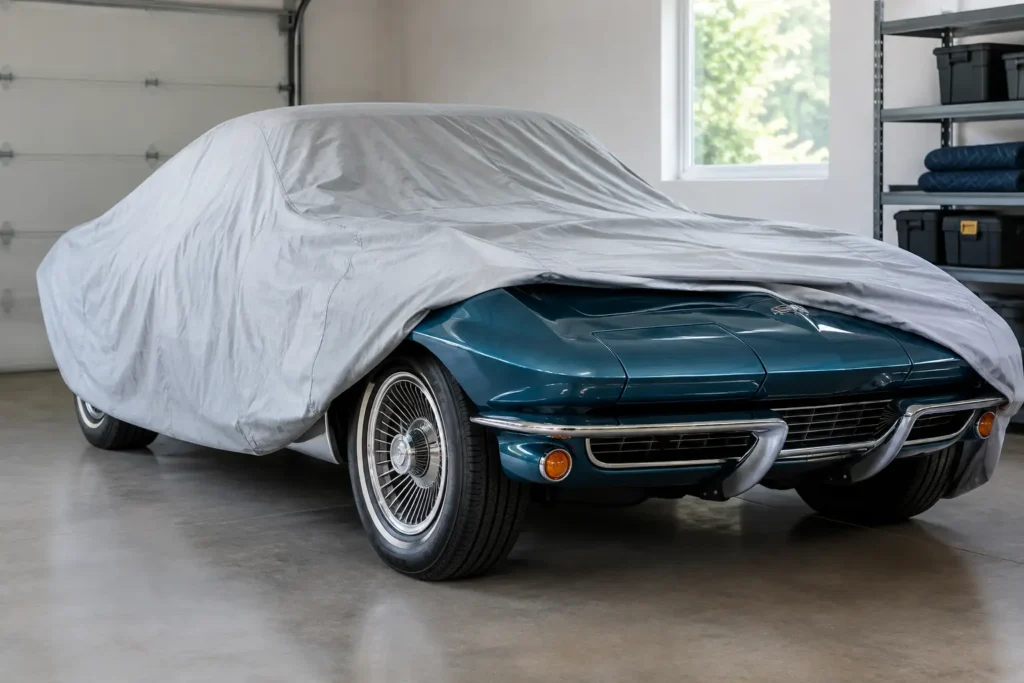
A breathable fitted cover is often worthwhile in an enclosed garage. It protects paint from dust and minor contact while allowing moisture to escape. Avoid plastic sheets, tarpaulins or non-breathable covers placed directly over the vehicle. These can trap condensation against paintwork and trim, which defeats the purpose of covering the car at all.
Battery condition is another practical consideration. If there is safe access to power and the manufacturer’s guidance permits it, a quality maintenance charger can help keep the battery in good condition during longer storage. Where power is not available, owners should plan regular checks rather than assuming the car will be ready after months untouched.
Tyres also deserve attention. Check pressures before storage and inspect them periodically if the car will not move for some time. The exact approach depends on the vehicle, its weight and the duration of storage, but leaving a classic entirely ignored for months is rarely the best plan.
Build a simple checking routine
Secure storage does not mean forgetting the car exists. A brief, planned visit is more useful than occasional anxious checks after bad weather. For many owners, a monthly inspection is sensible, although the right frequency depends on the garage conditions and how long the car is being stored.
On each visit, look for dampness on the floor, condensation on glass, unusual smells in the cabin and signs that a cover has shifted. Check that the garage door, locks and access arrangements remain as expected. If the car is stored within a residential building, confirm that building works, changes to access procedures or maintenance activity have not affected the space.
Keep these visits calm and consistent. Repeatedly opening the car in a damp garage, leaving doors ajar or moving it unnecessarily can create as many issues as it solves. The value of an inspection is spotting a change early: a new leak, a failed moisture absorber or a garage door that no longer closes properly.
Protect classic cars in storage from avoidable damage
Many storage problems are not dramatic. They are small, preventable issues that become expensive or disappointing because nobody noticed them early enough. The following points are particularly relevant when choosing or managing a private storage space:
- Keep the space clear around the vehicle. Tight access increases the chance of scuffs from doors, boxes, bicycles or other stored items.
- Do not use the garage as a general dumping ground. Cardboard, textiles and clutter can hold moisture and make inspections harder.
- Avoid storing the car beneath exposed pipework or directly beside walls showing signs of damp.
- Choose a space with access that suits the vehicle. Narrow turns, steep ramps and low entrances can be unsuitable for low-slung classics or cars with long overhangs.
- Keep keys and any access fobs securely managed, with clear arrangements where a space is rented privately.
The right arrangement should make ownership easier, not create another uncertainty. If a garage owner is renting out an unused space, being clear about access hours, door operation, any building rules and the dimensions of the space helps attract suitable long-term users. A well-presented, dry and secure garage is particularly valuable to owners of cars that cannot be left exposed on the street.
Match the storage space to how you use the car
Some classics are kept as occasional weekend cars and need convenient access from the city centre. Others are stored for much longer periods and benefit from a more enclosed, lower-traffic environment. Neither approach is automatically better. The right choice comes down to frequency of use, security expectations and the physical suitability of the space.
For example, a resident near Deansgate, Castlefield or Salford Quays may value a secure private garage within easy reach of home. An owner with a vehicle used only seasonally may place greater weight on dryness, space around the car and controlled access. In both cases, the storage location needs to be assessed for the vehicle itself, not just chosen because a bay happens to be available.
Manchester City Parking helps match drivers with privately managed long-term garages and secure spaces across Manchester, Salford and Greater Manchester. For a classic vehicle, it is worth stating the car’s approximate dimensions, ground clearance and whether an enclosed garage is essential from the outset. That keeps the search focused on spaces that are genuinely suitable.
A classic car is rarely just transport. It may represent years of care, a family connection or a significant investment. Give it a storage space that reflects that: dry, secure, accessible and checked often enough that small issues stay small.